IICRC Certification: Why It Matters for Your Riverton Restoration
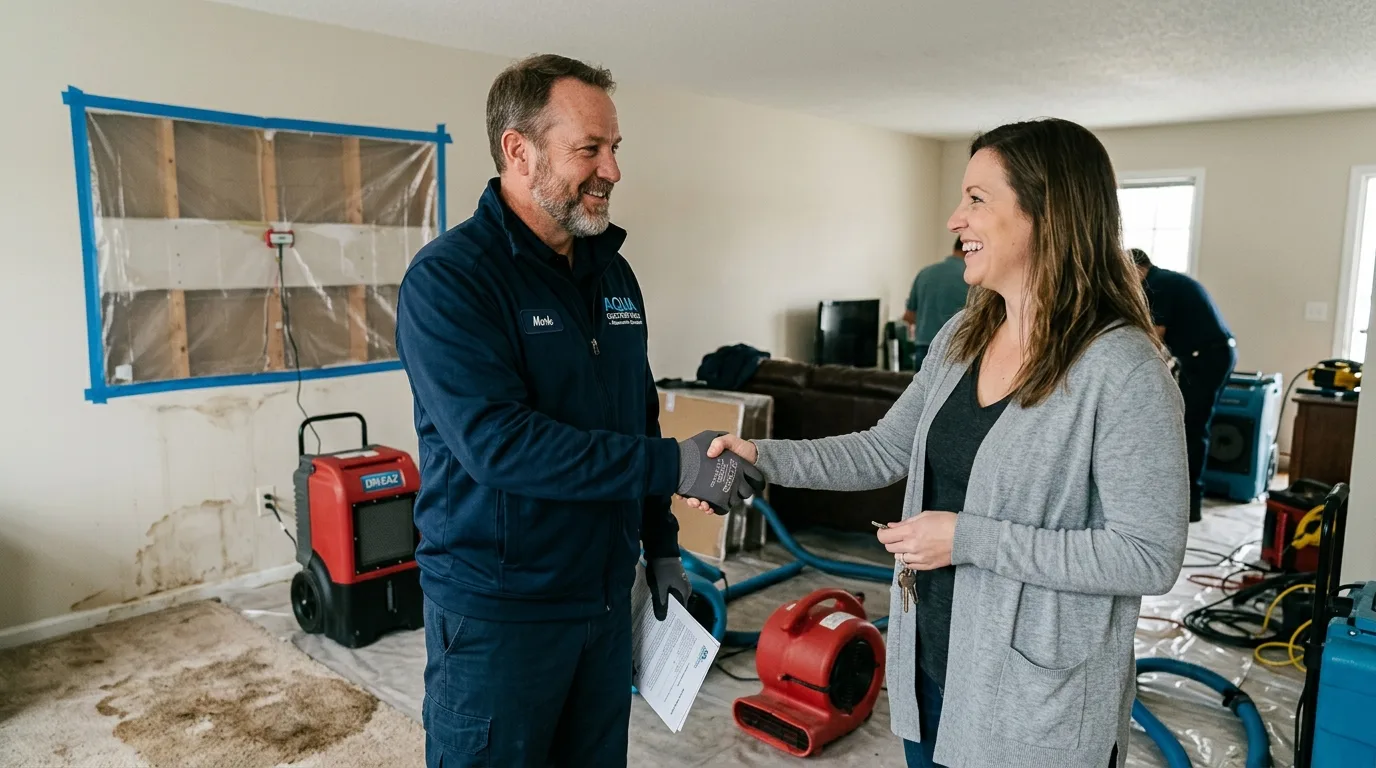
When you’re searching for water damage restoration in Riverton, you’ll see “IICRC certified” mentioned by virtually every legitimate restoration company. But what does IICRC certification actually mean — and why does it matter specifically for your Riverton property? This guide explains what the certification covers, what it requires of technicians, how it affects your restoration outcome, and how to verify credentials before you hire.
In this post, we explain the IICRC standard that governs water damage restoration, what certified technicians know and non-certified technicians may not, why this matters for mold prevention, and how to verify a company’s credentials quickly.
IICRC-Certified Water Damage Restoration in Riverton
Every technician holds current WRT certification. Call Riverton Water Damage Restoration at (877) 698-1311 for a free assessment.
What the IICRC Is and Why It Was Created
The Institute of Inspection, Cleaning and Restoration Certification is the governing body that establishes technical standards for the restoration industry. The IICRC’s S500 Standard and Reference Guide for Professional Water Damage Restoration is the document that defines proper methods, equipment requirements, and drying validation criteria for water damage restoration projects. It’s the restoration equivalent of a building code — a minimum technical standard that certified practitioners are trained to meet.
IICRC was created because the absence of standards in the restoration industry historically led to significant quality variation: some contractors performed genuine structural drying to measurable standards while others removed visible water and considered the job done — leaving hidden moisture, mold, and structural damage that property owners discovered months later. The S500 standard and the certification system created a verifiable framework that distinguishes technicians who understand drying science from those who simply own a water pump.
For Riverton homeowners dealing with water events, this distinction matters more than in many markets because of the clay-heavy soil conditions that extend moisture exposure around foundations. A technician who understands psychrometrics (the science of moisture in air) and how to account for ongoing external moisture contribution when calculating drying targets is qualitatively different from a technician who doesn’t.
What IICRC Certification Covers
The core credential relevant to water damage restoration is the Water Damage Restoration Technician (WRT) certification. The WRT covers:
- Water damage categories and classes (the system that determines protocols and cost)
- Psychrometrics and drying science — understanding humidity, temperature, and airflow relationships
- Equipment selection and placement: dehumidifier sizing, air mover positioning, monitoring intervals
- Moisture measurement using meters and thermal imaging cameras
- Documentation requirements: moisture logs, drying records, photo documentation
- Health and safety protocols for each water category
Additional relevant certifications for Riverton restoration companies include:
- Applied Microbial Remediation Technician (AMRT) — covers mold assessment and remediation, critical after water events
- Fire and Smoke Restoration Technician (FSRT) — covers fire and smoke damage restoration
- Applied Structural Drying (ASD) — advanced credential for structural drying science
A company that holds WRT, AMRT, and ASD certifications across its technical staff is equipped to handle the full spectrum of water damage scenarios Riverton homeowners face — from spring basement flooding to post-fire suppression water damage.
Why IICRC Standards Specifically Help Riverton Properties
Riverton’s clay soils create a drying challenge that separates technicians who understand drying science from those who don’t. When basements flood in Riverton during spring snowmelt, the surrounding clay soils remain saturated for days or weeks after the flooding event — meaning that moisture continues migrating into the basement from the exterior even while drying equipment is running inside.
An IICRC-trained technician accounts for this ongoing moisture contribution when setting drying targets and positioning equipment. They use moisture monitoring to track the relationship between daily drying progress and external moisture input, adjusting equipment placement and dehumidifier capacity accordingly. A non-trained technician using the same equipment may achieve inadequate drying because they don’t account for the external moisture source — and produce a project that passes a visual inspection but fails moisture meter testing.
In practical terms: IICRC certification in Riverton is the difference between drying that actually reaches IICRC standard levels in structural materials versus drying that looks complete on the surface while hidden moisture continues accumulating behind walls and under floors in contact with saturated clay.
Ask Any Riverton Restoration Company for Their IICRC Credentials
We provide our certification numbers upfront. Call (877) 698-1311 — Riverton Water Damage Restoration carries WRT, AMRT, and full insurance as Utah law requires.
What the Certification Does NOT Guarantee
IICRC certification is a knowledge and training credential — it verifies that a technician has completed a curriculum and passed an examination. It does not guarantee:
- That every project is executed flawlessly
- That the company has adequate equipment for your specific project scope
- That insurance documentation meets your carrier’s requirements
- That the company’s pricing is reasonable
Certification is a baseline requirement, not a complete selection criterion. Along with IICRC certification, evaluate: the company’s response time, the quality of their documentation, their direct experience with your specific damage type (basement flooding vs. sewage backup, for example), and their direct billing experience with your insurance carrier.
How to Verify IICRC Certification Before Hiring
You should not take a company’s word for their IICRC certification — verify it directly:
- Ask the company for the names and certification numbers of the specific technicians who will be working on your project.
- Visit iicrc.org and use the verification tool to confirm active certification status.
- Confirm that the certifications are current — IICRC credentials have renewal requirements and can lapse.
In Utah, there is no state licensing requirement specifically for water damage restoration, but contractors performing structural repairs must hold a Utah Specialty Contractor License with $1M general liability insurance through the Utah Division of Professional Licensing (DOPL). Ask for the license number and verify it at the DOPL website. These two credentials — IICRC certification and Utah Specialty Contractor License — are the minimum baseline for any Riverton restoration contractor.
Frequently Asked Questions
Is IICRC certification required by law for restoration contractors in Utah?
No — Utah does not require IICRC certification as a legal requirement for water damage restoration. However, many insurance carriers require or prefer IICRC-certified contractors for covered restoration work, and some policies specify that restoration must meet IICRC S500 standards for coverage to apply. IICRC certification also affects your ability to dispute inadequate restoration later — a certified company working to documented standards provides a verifiable performance record that’s difficult to dispute.
What’s the difference between IICRC certification and a Utah Specialty Contractor License?
These are two separate credentials with different purposes. IICRC certification is a technical knowledge credential — it verifies the technician understands restoration science. A Utah Specialty Contractor License (required by the DOPL for contractors performing repairs valued at qualifying thresholds) is a business and legal credential — it requires liability insurance, passing a business/law exam, and registration with the state. A legitimate Riverton restoration company should hold both. A company with only one is either technically unqualified or legally unprotected for your project.
Does using an IICRC-certified contractor help with my insurance claim?
Yes, in several ways. Insurance adjusters recognize IICRC moisture logs and documentation as industry-standard evidence for the scope and completeness of restoration work. Some policies specifically reference IICRC S500 standards as the required drying protocol. And when disputes arise about whether drying was adequate — a common source of claims disputes — IICRC documentation provides an objective performance record that protects both you and the contractor.
IICRC-Certified Water Damage Restoration — Riverton to Salt Lake County
Riverton Water Damage Restoration holds WRT and AMRT certifications with verified moisture documentation on every project. Call (877) 698-1311 for a free assessment.
Related: