Frequently Asked Questions About Water Damage in Riverton, UT
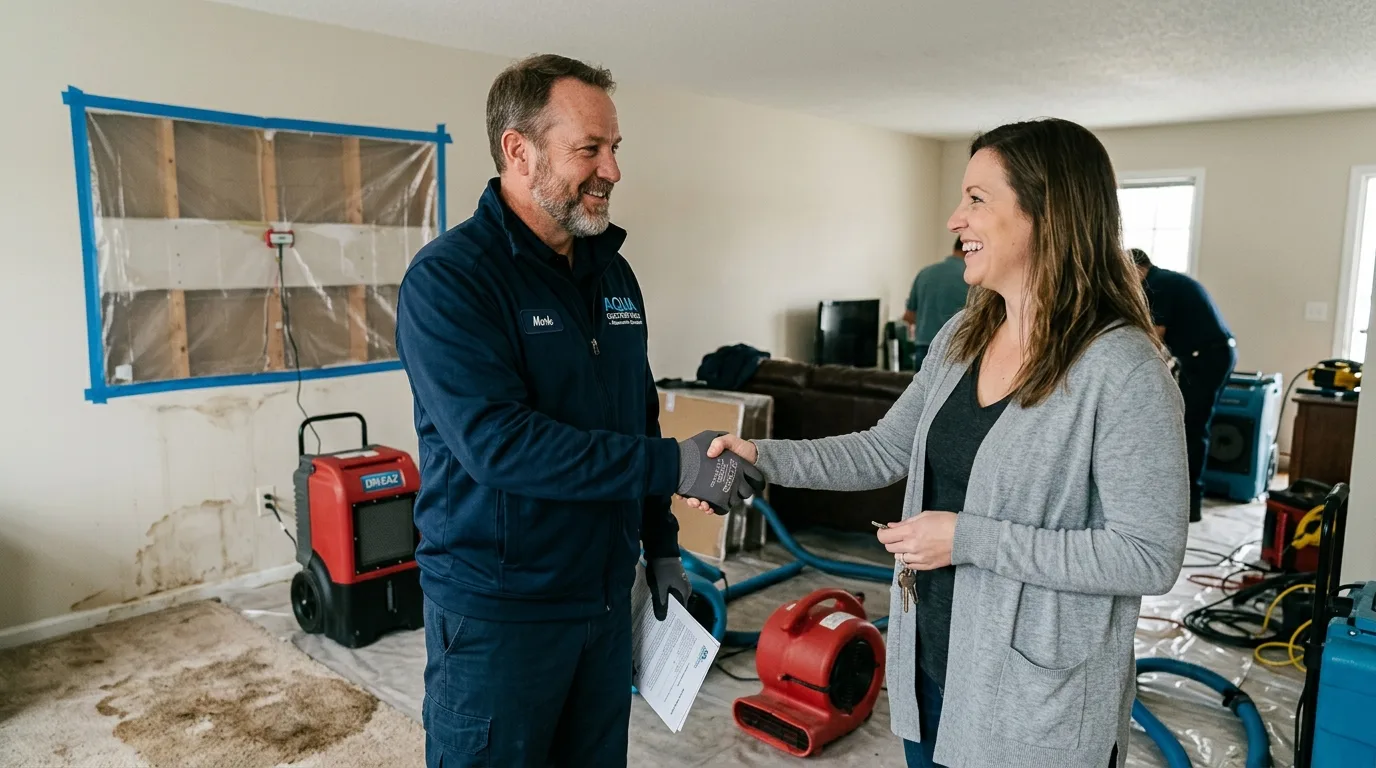
Water damage restoration questions come in waves — first the emergency, then the confusion about what to do next, then the financial and insurance questions that follow. After responding to water damage events across Riverton and Salt Lake County, we’ve collected the questions homeowners ask most often. This FAQ compiles honest, specific answers for Riverton homeowners — not generic national content, but answers that reflect what water damage actually looks like here.
In this post, we address questions about what water damage restoration in Riverton costs, how long it takes, what’s covered by insurance, when mold becomes a risk, and who to call in an emergency.
Water Damage Question That's Not Answered Here? Call Us
Riverton Water Damage Restoration answers questions 24/7 — free of charge. Call (877) 698-1311 anytime.
Questions About What to Do First
What should I do the moment I discover water damage in my Riverton home?
In order: ensure your safety (don’t enter electrically hazardous areas), shut off the water source if it’s from inside the building, turn off electricity to affected areas, document with photos before touching anything, then call for professional water extraction immediately. Do not start cleanup first — documentation before cleanup is essential for insurance claims. See our complete 10-step guide for water damage response in Riverton for the full sequence.
Can I wait until morning to call for water damage help?
No. Mold begins colonizing wet materials within 24–48 hours of water exposure. Structural materials continue absorbing moisture even after visible water is removed. Every hour of delay between water exposure and professional extraction adds to the damage scope and restoration cost. Riverton Water Damage Restoration is available 24/7 at (877) 698-1311 — calling at 2 AM for a midnight pipe burst is the right decision.
Should I try to extract water myself with a shop vac?
For a small, contained spill from a clean water source (minor plumbing drip, small appliance overflow), a shop vac can help with initial surface water removal while you wait for professionals. For anything beyond a small spill — any basement flooding, any Category 2 or 3 water event, any situation involving wall or floor penetration — professional extraction equipment is required. Household wet-dry vacuums cannot create the negative pressure needed for structural drying and cannot remove moisture from wall cavities or subfloor assemblies.
Questions About Cost
How much does water damage restoration typically cost in Riverton?
Based on 2026 Utah restoration industry data: minor localized events cost $450–$1,000; medium-scale basement flooding typically runs $1,361–$6,270; large events requiring structural repair and mold remediation cost $7,000–$16,000 or more. The national average is approximately $3,864. Riverton’s spring basement flooding from snowmelt and clay soil saturation tends toward the middle of these ranges. See our full cost guide for Riverton water damage restoration for a detailed breakdown.
What’s the most expensive type of water damage in Riverton?
Black water (Category 3) events — sewage backup, canal overflow, storm flooding — carry the highest cost per square foot ($7–$7.50+) due to biohazard protocols, specialized equipment, and disposal requirements. When combined with extensive structural material contamination (sewage soaked into wall cavities and subfloor), total project costs can easily reach $10,000–$20,000. Spring flooding from the Utah & Salt Lake Canal in Riverton’s western neighborhoods is often classified as Category 3 depending on canal water quality.
Questions About Insurance
Does homeowner’s insurance cover water damage from a burst pipe in Riverton?
Yes — burst pipe events are among the most commonly covered water damage claims on Utah homeowner’s policies. A frozen pipe that ruptures during Riverton’s cold winters, a supply line that fails unexpectedly, a water heater that ruptures — these are sudden and accidental internal events that standard HO-3 policies cover. Document the event thoroughly before calling your insurer. See our Utah water damage insurance claim guide for filing steps.
Does homeowner’s insurance cover spring snowmelt basement flooding in Riverton?
Generally, no. Spring snowmelt flooding, groundwater intrusion from clay soil saturation, and canal overflow are classified as flood events under insurance definitions — external-source water not covered by standard homeowner’s policies. Separate flood insurance (NFIP or private) is required for this coverage. This is one of the most important coverage gaps for Riverton homeowners given our spring flooding patterns. The water damage vs. flood damage guide explains the distinction in full.
Not Sure if Your Riverton Water Damage Is Covered?
We work with all insurance carriers and can help assess your coverage before you file. Call (877) 698-1311 for a free assessment.
Questions About Mold
How soon after water damage does mold start growing in Riverton homes?
Mold begins germinating on wet organic materials (drywall paper, wood framing, insulation, carpet backing) within 24–48 hours of water exposure at indoor temperatures. Riverton’s typical indoor temperature range of 65–75°F falls within the optimal germination range for most household mold species. Visible mold typically appears within 3–10 days depending on the species and moisture level. Professional structural drying completed within 24 hours of the water event dramatically reduces mold risk. See our Riverton mold after water damage guide for complete detail.
Should I test for mold after water damage in my Riverton basement?
Yes — particularly if professional structural drying was not initiated within 24–48 hours of the event, or if the water event involved outdoor-source water (spring flooding, canal overflow). A professional mold inspection using air sampling and moisture meters identifies mold growth before it becomes visible and extensive. Given Riverton’s clay soil conditions that extend structural moisture exposure, post-water-damage mold assessment is a standard recommended step for any medium or large water event.
Questions About Process and Timeline
How long does water damage restoration typically take in Riverton?
The extraction phase (removing standing water) takes 1–4 hours for most residential events. Structural drying typically runs 3–7 days for medium-scale events, monitored with daily moisture readings. Mold prevention and minor repairs may add 1–3 days. Full structural restoration and rebuilding (new drywall, flooring, paint) depends on the damage scope but typically adds 1–3 weeks for medium-scale projects. Total project timeline from emergency call to restored condition: most medium-scale Riverton water damage events resolve in 2–4 weeks.
What equipment should a professional restoration team bring to a Riverton property?
For a legitimate professional response, expect: truck-mounted or large-capacity portable water extraction units, commercial dehumidifiers (150+ pint/day capacity, not consumer-grade), high-velocity air movers, thermal imaging camera, professional moisture meters (pin and pinless types), and documentation forms. A team that arrives with only a few shop vacs and box fans is not equipped to perform proper structural drying — those tools provide surface ventilation only and cannot achieve IICRC standard drying.
Questions About Specific Situations
My Riverton basement has flooded twice in two springs — what’s causing it and can it be fixed?
Recurring spring basement flooding in Riverton is typically caused by one of three mechanisms (or a combination): clay soil hydrostatic pressure from spring saturation, groundwater elevation from Utah & Salt Lake Canal seepage, or surface drainage that directs runoff toward the foundation. Each requires a different mitigation approach. Our free assessment includes moisture source identification — we map where water is entering and from what direction — which is the first step toward designing a permanent solution. Call (877) 698-1311 to schedule.
I found what looks like mold in my basement wall near where it flooded last spring. What do I do?
Call for a professional mold assessment immediately — do not attempt to clean it yourself. Mold in wall cavities requires containment to prevent spore dispersal during removal. A certified IICRC mold remediation technician will assess the extent, set up negative pressure containment, remove contaminated materials, treat surfaces with EPA-registered antimicrobials, and perform post-clearance air testing to verify the remediation was complete. Our mold remediation service in Riverton covers this process in full.
What is the difference between water extraction and water damage restoration?
Water extraction is the first step: removing standing water using pumps and extractors. Water damage restoration is the full process: extraction, structural drying (removing moisture from within building materials using dehumidifiers and air movers), mold prevention assessment, and repair of damaged materials. Many homeowners confuse extraction with complete restoration — visible water removal is the beginning of the process, not the end. Structural materials can hold significant moisture for days after visible water is gone, and that hidden moisture is what drives mold growth and structural damage.
More Questions About Water Damage in Riverton?
We answer questions 24/7 — and provide free on-site assessments across Salt Lake County. Call Riverton Water Damage Restoration at (877) 698-1311.
Related: