Mold After Water Damage in Riverton, UT: Risks & Prevention
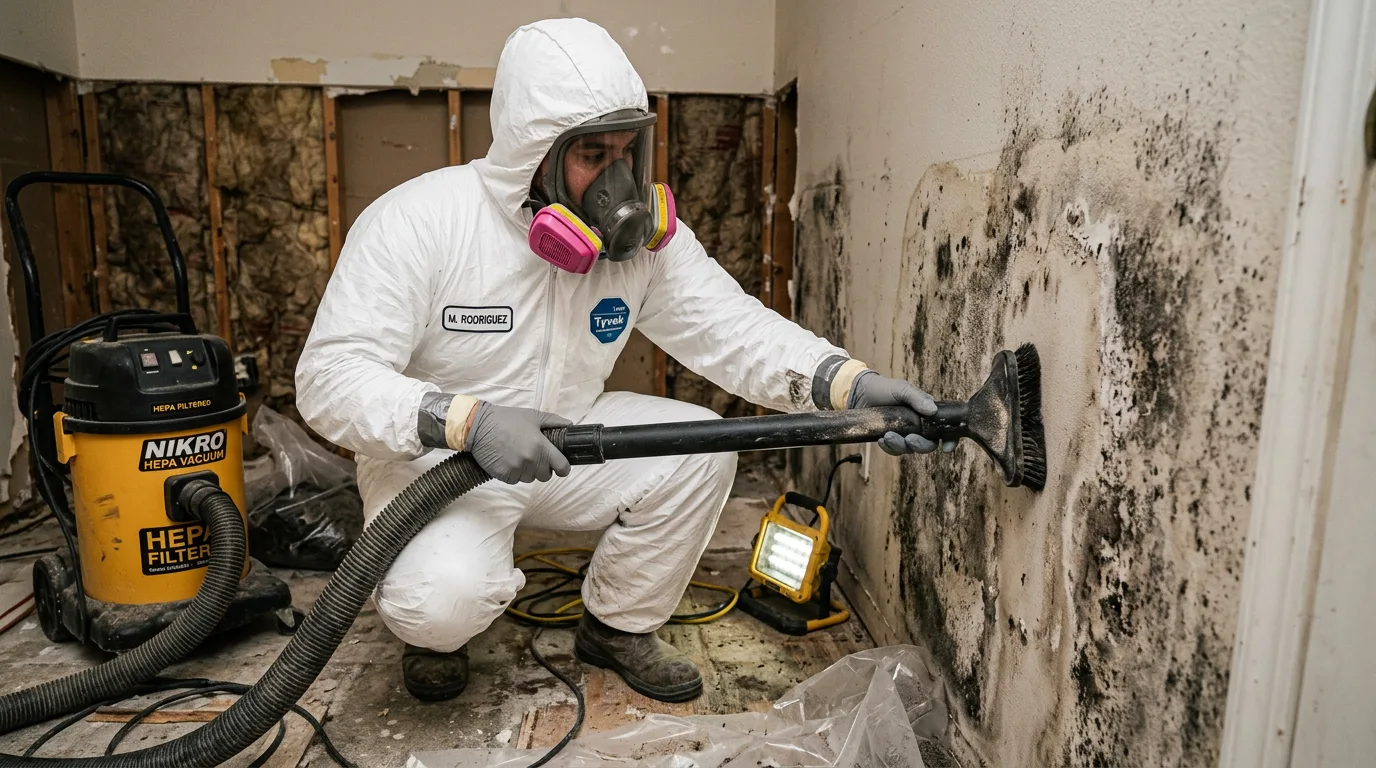
After a water damage event in Riverton, the visible crisis — water on the floor, soaked drywall, ruined flooring — is just the first chapter. The second chapter begins within 24–48 hours, quietly inside wall cavities and under flooring, as mold spores that were already present in the air begin colonizing the newly damp materials. By the time most homeowners discover mold growth in their Riverton home after a water event, the colony has been developing for weeks.
This post covers how quickly mold grows after water damage, what conditions make Riverton homes particularly vulnerable, how to detect hidden mold, and when professional mold remediation is the appropriate response.
Recent Water Damage in Riverton? Don't Wait on Mold Testing
We assess for hidden mold growth within 24–48 hours of water events. Call (877) 698-1311 for a free post-flood mold assessment.
How Quickly Mold Grows After Water Damage in Riverton
The 24–48 hour mold growth window is real, but it requires both moisture and the right temperature conditions. Riverton’s indoor temperatures typically range from 65°F to 75°F year-round — the ideal germination range for most household mold species. When water-saturated materials at those temperatures hold moisture for 24 hours or more, mold spores (which are always present in indoor air) begin germinating on organic surfaces: drywall paper, wood framing, insulation, carpet backing.
Visible mold typically becomes apparent within 3–10 days of the initial water event, depending on the species. Stachybotrys chartarum (black mold) requires extended saturation — typically 7–12 days — before it appears. Cladosporium and Penicillium species can become visible in 3–5 days. But mold is metabolically active and producing spores and mycotoxins before it’s visible to the naked eye.
The practical implication for Riverton homeowners: if professional structural drying was not completed within 24–48 hours of water exposure, mold growth is likely — not possible, but likely. A professional mold inspection should be part of every post-water-damage restoration process that was not handled within the first 24 hours.
Why Riverton’s Seasonal Conditions Create Elevated Mold Risk
Riverton’s spring flood season creates a compound risk for mold growth that is specific to this community’s geology and infrastructure. When Riverton basements flood during April and May — the peak snowmelt window — it’s often because clay-heavy Salt Lake County soils have become fully saturated and are directing moisture through foundation walls. This is not a fast, one-time intrusion event: it can be a slow, multi-day seepage that keeps materials chronically damp rather than wet and then dry.
Chronic dampness — materials held at elevated moisture content without ever reaching visible wetness — is actually more conducive to mold growth than acute flooding, because the moisture condition persists long enough for mold colonies to establish before any obvious drying signals occur. Homeowners in neighborhoods like Summerwood and Royal Farms who have dealt with spring basement seepage for multiple seasons often discover mold not after a dramatic flood event but after a long series of “minor” seepage events that collectively kept their wall assemblies above the moisture threshold for mold growth.
The Utah & Salt Lake Canal lateral seepage that affects Monarch Meadows and the 11800 South corridor creates a similar chronic moisture condition: not dramatic flooding, but persistent elevated groundwater that keeps below-grade materials above acceptable moisture levels for extended periods. Professional moisture monitoring — not visual inspection — is the only way to know whether your materials are staying dry enough to prevent mold establishment during these periods.
Types of Mold Found After Water Damage in Riverton Homes
Post-water-damage mold in Riverton residential properties typically includes:
- Cladosporium: appears gray-green or black, common on drywall and wood framing after moderate water exposure, typically visible within 3–5 days.
- Penicillium/Aspergillus: blue-green or white, often found in insulation and HVAC components, can spread through ductwork to the rest of the home.
- Stachybotrys (black mold): greenish-black, associated with chronic moisture in cellulose-rich materials (drywall, wood), requires 7–12 days of continuous saturation to establish.
- Chaetomium: brownish-gray mold often found in drywall paper after water damage, associated with structural material degradation over time.
Species identification matters because different molds require different remediation approaches and carry different health risk profiles. Air sampling during a professional mold inspection identifies both the species present and the airborne spore concentration relative to outdoor baseline levels.
Mold in Your Riverton Home After a Water Event?
IICRC-certified mold inspection and remediation with post-clearance testing. Call (877) 698-1311 for a free assessment across Salt Lake County.
How to Detect Hidden Mold After Water Damage
Visible mold growth is the last indicator to appear — by the time you can see mold, the colony has been established for days or weeks. Earlier detection relies on:
- Musty odor: the single most reliable early indicator. Mold produces volatile organic compounds that create an earthy or musty smell before visible growth appears. A musty smell in a basement or near a wall that recently experienced water intrusion should prompt professional assessment immediately.
- Air sampling: a professional air sample measures airborne mold spore concentrations and compares them to outdoor baseline. Elevated indoor spore counts relative to outdoor levels indicate active mold growth even without any visible indicators.
- Thermal imaging: temperature differentials on wall surfaces indicate moisture inside wall cavities — the conditions that promote mold growth before surface evidence appears.
- Moisture meters: professional meters measure moisture content within structural materials (drywall, wood framing), identifying areas above the 19% moisture threshold that promotes mold colonization.
DIY mold test kits from hardware stores are unreliable for post-water-damage assessment: they collect spores from air currents but cannot quantify spore concentrations or locate the source. For any Riverton home that has experienced water damage, professional inspection is the appropriate tool.
When Professional Mold Remediation Is Required
Not every post-water-damage situation requires professional mold remediation. Small, isolated surface mold on non-porous materials (tile, metal, glass) can sometimes be cleaned with appropriate biocides by a knowledgeable homeowner. Professional mold remediation is required when:
- Mold is present in porous materials (drywall, insulation, wood framing, carpet)
- The affected area is larger than 10 square feet (EPA remediation guidance threshold)
- Mold is present inside wall cavities, subfloor, or HVAC systems
- Household members are experiencing health symptoms possibly related to mold exposure
- The home is a rental property or involved in a real estate transaction requiring documentation
Attempting DIY mold removal in wall cavities without proper containment, HEPA filtration, and PPE typically disperses spores to previously unaffected areas of the home — creating a larger problem than the original colony. IICRC-certified remediation with post-clearance testing is the only approach that verifies successful removal.
Frequently Asked Questions
How long after water damage should I wait to test for mold in my Riverton home?
Don’t wait — test as soon as possible. If professional structural drying was completed within 24–48 hours and verified with moisture meters, the risk of mold growth is substantially reduced. If water exposure lasted longer, or if drying was incomplete, have a professional mold assessment performed immediately — not in 2–3 weeks. Early detection and remediation of a small colony is far less expensive than remediating an established infestation.
Can I stay in my Riverton home during mold remediation?
It depends on the scope of remediation. Small, localized projects with proper containment may allow occupancy of unaffected parts of the home. Large remediation projects involving multiple rooms, HVAC systems, or significant structural material removal typically require temporary relocation for the duration of the project. Our team assesses occupancy safety as part of every remediation plan and provides specific guidance for your situation.
Does mold remediation void my homeowner’s insurance claim in Utah?
No — professional mold remediation performed after a covered water damage event is itself a covered loss. The key is that you must first have a covered water damage event (burst pipe, appliance failure) and then mold must develop as a consequence of that event. Pre-existing mold unrelated to a water damage event is typically excluded. Document the timeline — water damage first, then mold assessment — to support your claim. We provide written timelines and cause-and-origin documentation for every project.
Mold Found After Water Damage in Riverton — Act Now
Riverton Water Damage Restoration provides IICRC-certified mold remediation with post-clearance testing. Call (877) 698-1311 for a free assessment.
Related: