Why Riverton Basements Flood: Canal Overflow & Clay Soil
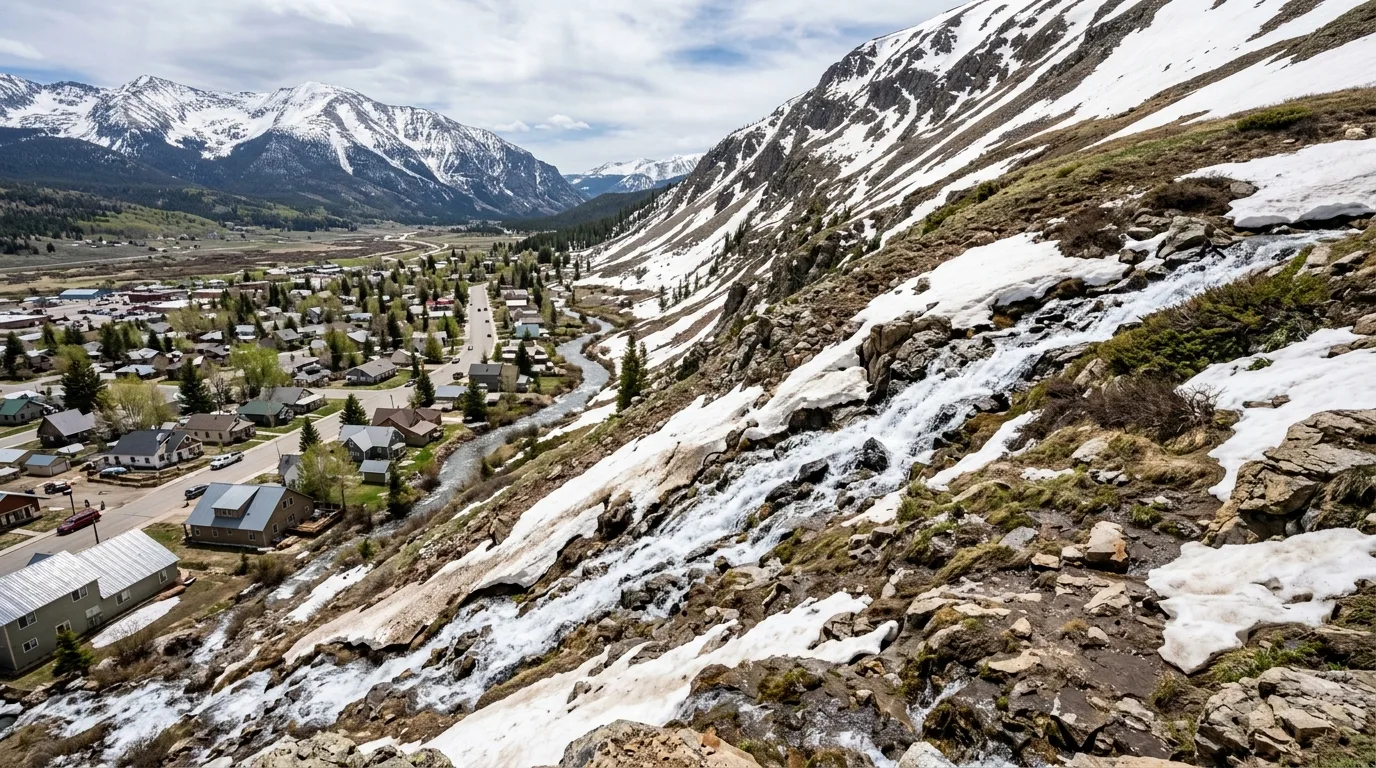
Every spring, homeowners across Riverton face the same unwelcome discovery: water in the basement. If your home has flooded more than once, you’re not dealing with bad luck — you’re dealing with a combination of geological and infrastructure conditions that make Riverton basements uniquely vulnerable to water intrusion. Understanding why Riverton basements flood is the first step toward protecting your home and knowing when to call for professional water damage restoration in Riverton.
In this post, we cover the soil conditions that trap moisture against foundations, the canal infrastructure that raises groundwater, and the seasonal patterns that determine when your risk is highest.
Flooded Basement in Riverton? We Respond 24/7
Call (877) 698-1311 for immediate water extraction and damage assessment — serving all of Riverton and Salt Lake County.
Why Riverton Basements Flood: The Clay Soil Problem
Riverton sits on ancient Lake Bonneville lakebed soils — dense, clay-heavy layers deposited when a vast prehistoric lake covered the Salt Lake Valley thousands of years ago. These lacustrine clays have extremely poor drainage characteristics: when they become saturated, they stop accepting additional water almost entirely and instead redirect moisture laterally toward any nearby structure. Unlike sandy soils that allow water to percolate downward quickly, Riverton’s clay absorbs slowly and releases even more slowly.
The practical effect for homeowners is this: after a rainfall event or during spring snowmelt, the soil around your foundation becomes saturated and holds that moisture in direct contact with your foundation walls for days or even weeks. Hydrostatic pressure — the weight of water-saturated soil pressing against your basement walls — forces water through any available crack, joint, or pore. This is not a construction defect in most cases; it’s what Lake Bonneville clay does, and it affects properties throughout Salt Lake County.
The clay’s high shrink-swell potential adds another dimension to the problem. During dry summer months, the clay pulls away from foundation walls, creating gaps. When moisture returns in fall and spring, water channels directly into those gaps before the soil re-expands to close them — a cyclical process that gradually worsens foundation water infiltration over years of drought and wet cycles.
The Utah & Salt Lake Canal: A Flood Risk Unique to Riverton
Most Salt Lake County communities deal with clay soil issues, but Riverton has an additional flood variable that sets it apart: the Utah & Salt Lake Canal, which runs through the Riverton area. Unlined sections of this canal allow lateral seepage — water leaves the canal laterally and raises local groundwater tables independently of rainfall or snowmelt. During high-runoff years, this seepage can cause basement flooding on days when no recent rain has fallen and no obvious flood event has occurred.
The 11800 South corridor in Riverton has documented basement flooding issues linked specifically to this groundwater elevation mechanism. Homes near this corridor — including properties in the Monarch Meadows neighborhood — are particularly susceptible because canal-driven groundwater rises can occur during the canal’s operating season even during relatively dry spring and early summer periods. This distinguishes Riverton’s flood risk from that of neighboring West Jordan or South Jordan, where canal proximity is less of a factor.
Understanding whether your basement flooding is driven by surface water, lateral groundwater from the canal system, or saturation from snowmelt is important because each source requires a different mitigation approach. A professional water damage restoration assessment can help identify the primary source driving your specific property’s flooding pattern.
Spring Snowmelt: Riverton’s Highest-Risk Season
Spring — specifically March through May — is when basement flooding peaks across Riverton. The Wasatch Mountains accumulate 300–500 inches of snowpack annually, and as temperatures rise in late winter and early spring, that snowmelt flows downslope and through the Salt Lake Valley’s drainage networks. May is Riverton’s wettest month on average, meaning that spring rain and snowmelt frequently coincide, pushing total ground saturation beyond the threshold that clay soils can handle.
By the peak of spring runoff, Riverton’s clay soils may be fully saturated at depth, canal levels may be elevated, and surface water may have no percolation path available — all simultaneously. Homes that have experienced basement water in prior spring seasons should be treated as high-risk assets each March: ensure sump pumps are functional, check that window well drains are clear, and monitor for early signs of wall seepage before visible water accumulates on the floor.
Riverton City recognizes the severity of spring flooding risk — the city provides free sandbags (25 per household) during spring runoff periods for residents near flood-prone areas. This is a community-level acknowledgment of what individual homeowners in neighborhoods like Midas Crossing and Rose Creek already know from experience.
Winter Freeze-Thaw and Burst Pipes
While spring is Riverton’s primary flood season, winter brings a different water damage risk: burst pipes. Riverton’s temperatures regularly drop below freezing from December through February, and water supply lines in uninsulated exterior walls, crawl spaces, or garages are vulnerable to freezing. When a pipe freezes, the expanding ice can rupture the pipe — and when temperatures rise, the break releases water rapidly into walls, floors, or basements.
Older homes in Riverton neighborhoods like Saddlebrook Estates, built in the 1980s and 1990s with plumbing configurations that predate modern insulation standards, carry higher burst-pipe risk than newer construction. A burst pipe during winter is primarily a plumbing emergency and a water damage restoration emergency simultaneously — the water damage begins immediately upon pipe failure and worsens every hour until extraction begins.
Practical Steps for Riverton Homeowners
Understanding your risk is useful only if it informs action:
- Inspect your sump pump every fall — test it with a bucket of water before the spring season begins, and consider a battery backup for power outages during storms.
- Regrade your landscaping if the ground slopes toward your foundation — even a 2% grade away from the house can significantly reduce hydrostatic pressure.
- Seal foundation cracks before spring — even hairline cracks in concrete block walls can become significant water pathways when hydrostatic pressure peaks.
- Clear window well drains — leaves and debris block the drainage path that keeps window wells from filling with rainwater.
- Know your insurance coverage — most standard policies do NOT cover flood damage from external sources like canal overflow or groundwater. A separate flood policy or endorsement may be necessary.
Had a Basement Flood in Riverton? Get a Free Assessment
Our IICRC-certified team assesses the water source, the damage, and the best recovery path — at no cost. Call (877) 698-1311.
Cost of Basement Flooding in Riverton
The financial impact of basement flooding in Riverton ranges widely based on volume, duration, and affected materials. According to Utah restoration industry data, minor localized water events cost $450–$1,000 to address, while medium-scale basement flooding affecting flooring, drywall, and insulation typically runs $1,361–$6,270. Large events requiring mold remediation and structural repairs can exceed $7,000–$16,000.
The most important cost variable is response speed. Homeowners who call a professional water extraction team within hours of discovering flooding consistently spend 30–50% less on total restoration than those who wait 24 hours or more. Clay-heavy soils that retain moisture against your foundation walls mean that even after standing water is removed, the materials in direct contact with those walls continue absorbing moisture — making fast professional drying critical to limiting the damage scope.
Frequently Asked Questions
Why does my Riverton basement flood every spring even without heavy rain?
This is almost always a groundwater issue rather than a surface water issue. Riverton’s clay soils become fully saturated during spring snowmelt and can raise the local groundwater table to or above the level of your basement floor. Canal seepage from the Utah & Salt Lake Canal can also contribute, raising groundwater levels independently of rainfall. If your basement floods predictably every spring without an obvious surface water source, a sump pump system or foundation waterproofing is likely the appropriate long-term mitigation.
Does Riverton City help with basement flooding?
Riverton City provides free sandbags (25 per household) during spring runoff for residents in flood-risk areas. The city’s public works department also manages drainage infrastructure. However, foundation waterproofing and basement water damage restoration are homeowner responsibilities. Read our guide to filing a water damage insurance claim in Utah to understand what coverage may be available for your specific flooding event.
Is basement flooding from canal overflow covered by homeowner’s insurance?
Standard homeowner’s insurance policies in Utah typically do not cover flooding from external water sources — including canal overflow, groundwater rise, and surface flooding. These are generally classified as “flood” events that require separate flood insurance. Sudden and accidental internal water events (burst pipes, appliance failures) are typically covered. See our detailed breakdown in water damage vs. flood damage coverage for Riverton homeowners.
Protect Your Riverton Home Before the Next Spring
Call Riverton Water Damage Restoration at (877) 698-1311 for a free basement moisture assessment. We serve Riverton, Monarch Meadows, and all of Salt Lake County.
Related: