10 Steps After Water Damage in Your Riverton Home, UT
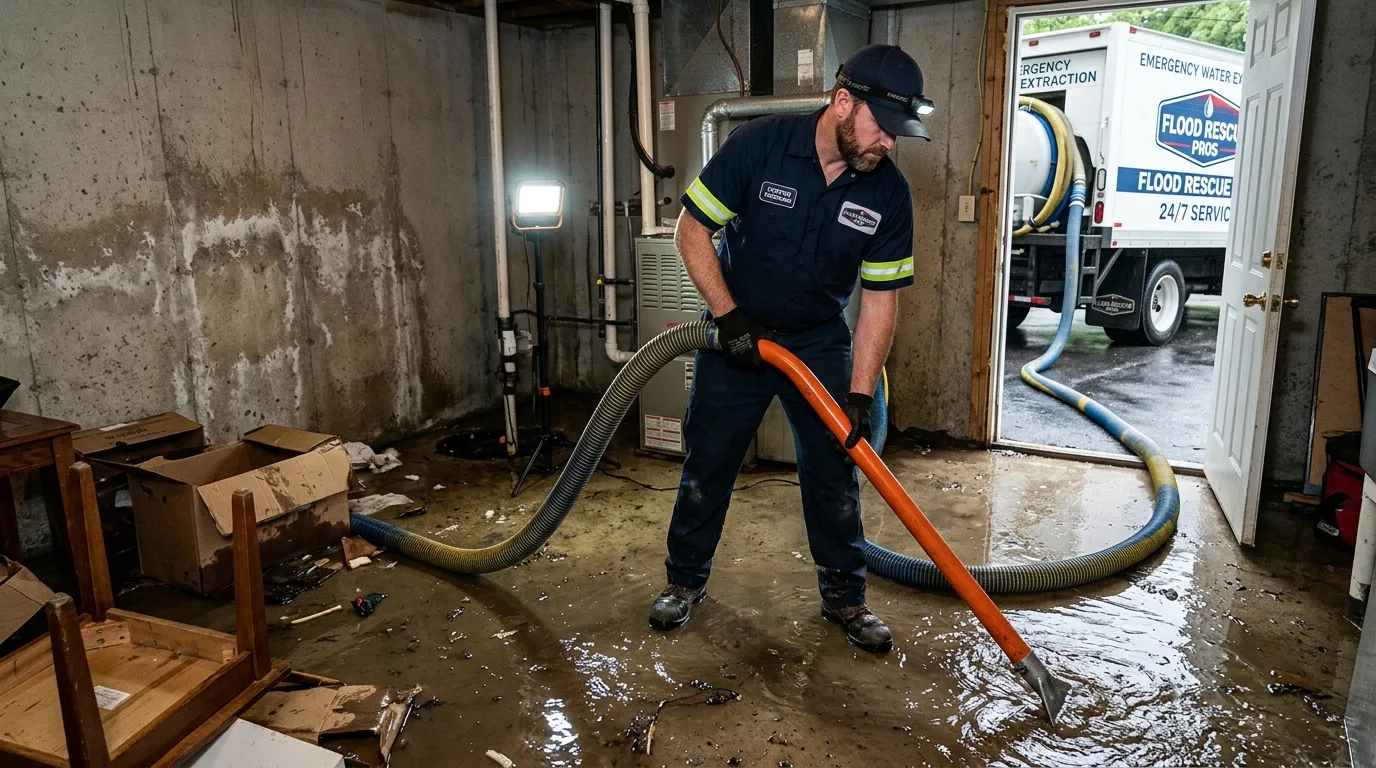
Water damage in your Riverton home moves faster than most homeowners expect. From the moment you discover standing water, flooding, or a burst pipe, every decision in the next hour affects how much of your home you save, how much you’ll spend on restoration, and whether your insurance claim is approved or disputed. This guide gives you the 10 specific steps — in the order that matters — to take immediately after water damage in your Riverton home.
These steps apply whether you’re dealing with a burst pipe in winter, a flooded basement from spring snowmelt, an appliance failure, or sewage backup. The sequence is designed to protect your safety first, then your property, then your financial recovery.
Water Damage in Riverton? Call for Immediate Help — 24/7
(877) 698-1311 — Riverton Water Damage Restoration dispatches around the clock across Salt Lake County.
Step 1: Ensure Your Safety Before Entering
Do not enter flooded spaces until you’ve confirmed two things: the water source is stopped (or can’t be safely reached), and electrical hazards are addressed.
Water and electricity are a lethal combination. If flooding has reached near electrical outlets, appliances, panels, or wiring, turn off the circuit breakers for the affected areas before entering. If the main panel is itself in the flooded area, contact your utility company. Do not wade into water that may be electrically charged.
If you smell gas, leave the property immediately and call your gas utility — water damage events can damage gas lines. If the flooding involves sewage backup (black water), do not enter the area at all — the biohazard risk requires professional PPE.
Step 2: Shut Off the Water Source
If the water is from an internal source — burst pipe, appliance failure, fixture overflow — stop it immediately. Your main shutoff valve is typically located near the water meter, in the utility room, or where the main supply line enters the foundation. Turn it completely off. Do not try to locate the specific break first; stopping the flow at the source is always the priority.
If the flooding is from external sources (snowmelt entering basement, sump pit overflow), the water source may not be stoppable — focus instead on getting extraction equipment there as fast as possible.
Step 3: Document Everything Before Touching Anything
This step saves more money than any other single action you can take for your insurance claim. Before you move furniture, begin mopping, or call anyone except an emergency restoration team, take:
- Wide-angle photos of every affected room showing the full extent of water
- Close-up photos of the water source (pipe, appliance, point of entry)
- Video walkthrough narrating what you see and when you discovered it
- Photos of all damaged personal property in its current position
Modern smartphones automatically embed timestamps in photo metadata, which insurance adjusters use to establish event timelines. Do not delete or edit these photos.
Step 4: Move Valuables and Irreplaceable Items Out of the Water’s Path
If you can safely enter the affected area, move items that are not yet affected by water — electronics, documents, photographs, heirlooms — to dry areas of the home. Do this quickly: the water perimeter expands rapidly as flooring and subflooring absorb moisture.
Do not remove damaged items. Leave everything in place for the insurance adjuster unless they are a safety hazard. Moving damaged items is fine; discarding them before documentation is not — it creates claims disputes.
Step 5: Call for Professional Water Extraction Immediately
This is not the step to defer until morning. Mold begins growing within 24–48 hours. Every additional hour of water contact increases structural absorption and total restoration cost by measurable percentages. In Riverton neighborhoods like Monarch Meadows or Mountain Ridge where basements have finished walls and flooring, the cost difference between same-hour and next-day extraction can be thousands of dollars.
Call Riverton Water Damage Restoration at (877) 698-1311 — we dispatch 24/7. Our IICRC-certified team brings truck-mounted extraction equipment, thermal imaging, and drying apparatus to begin the full mitigation process from the first hour.
Steps 1–5 Done? We Handle Everything From Here
Call (877) 698-1311 — we manage extraction, drying, documentation, and insurance coordination for your Riverton home.
Step 6: File Your Insurance Claim
Call your insurance carrier as soon as practical after beginning mitigation — most policies require prompt reporting. Have your documentation from Step 3 ready, along with:
- Your policy number
- Description of the event (what, when, where)
- Name of the restoration company already working
For burst pipes and appliance failures, this is typically a straightforward covered claim. For basement flooding from spring snowmelt or canal overflow, standard homeowner’s policies may not cover the event — see our detailed guide to water damage vs. flood damage coverage before filing to understand your specific coverage position.
Step 7: Don’t Discard Damaged Materials Without Adjuster Authorization
This is where homeowners most commonly make mistakes that cost them money. Do not remove damaged flooring, drywall, insulation, or furniture until your insurance adjuster has either seen it in person or given written authorization to proceed with removal. Document removed materials with photos before disposal. If materials must be removed urgently for health or safety reasons, photograph them extensively and confirm the reason for emergency removal in writing.
Restoration professionals can remove materials on an emergency basis with proper documentation — this is different from a homeowner discarding items before the adjuster arrives.
Step 8: Monitor Drying Progress Daily
Professional restoration drying is a multi-day process that requires monitoring. Your restoration team should provide daily moisture readings and drying logs showing progress toward target moisture levels in each structural material. Ask to see these logs — they are your evidence that the project is progressing correctly and that the space is actually drying, not just appearing dry.
Do not allow repairs (drywall reinstallation, flooring replacement) to begin until written moisture readings confirm that structural materials have reached IICRC-standard dryness levels. Premature repairs trap moisture inside wall assemblies and create the hidden mold scenarios we describe in detail in our mold after water damage guide for Riverton.
Step 9: Assess for Mold Risk
Even with fast extraction and professional drying, mold risk should be formally assessed once drying is complete. If any of the following apply to your event, request a post-drying mold inspection before repairs begin:
- Water was present for more than 24 hours before professional extraction began
- Flooding involved outdoor water sources (Category 2 or 3)
- The event occurred during spring or summer when temperatures favor mold growth
- Any musty odor is present during or after drying
A post-clearance air sample or surface test provides the documented evidence that mold did not establish during the water event — protecting both your health and your property’s future value.
Step 10: Address the Source to Prevent Recurrence
The final step is the most neglected. After restoration is complete and your home is back to pre-loss condition, address the underlying cause of the water event:
- If a burst pipe: insulate the vulnerable pipe location or reroute it away from unheated spaces
- If appliance failure: replace the failed appliance and inspect adjacent supply line age
- If spring basement flooding: assess drainage grading, sump pump capacity, and foundation sealing
- If canal-related groundwater seepage: consider foundation waterproofing or an interior drainage system
A Riverton home that floods in spring 2026 and is professionally restored but not structurally addressed will flood again in spring 2027. The restoration investment is protected only when the source is corrected.
Frequently Asked Questions
What should I do if I discover water damage in my Riverton home while I’m away?
Call for professional extraction remotely — you do not need to be physically present to start the process. Call Riverton Water Damage Restoration at (877) 698-1311, describe the situation, and authorize the team to assess and begin mitigation. Many homeowners first learn about water damage from a neighbor or a connected home monitoring device while traveling — remote authorization for professional response is always the right call. Delaying until you return extends the damage timeline.
Can I run my own dehumidifier and fans after water damage?
Household dehumidifiers and fans provide minimal structural drying benefit compared to professional equipment. A standard residential dehumidifier removes 30–70 pints of moisture per day; commercial units remove 150–200 pints. More importantly, household fans create air movement but don’t lower dew point, and can spread mold spores if mold is already present. Use household equipment for surface moisture control only while awaiting professional equipment, not as a substitute for it.
How long will my Riverton home be unusable during water damage restoration?
Most medium-scale Riverton water damage events allow continued habitation in unaffected parts of the home. Basement flooding typically doesn’t require vacating the upper floors. Major events, sewage backup, or projects requiring extensive structural demolition may require temporary relocation for 3–7 days. Our team provides a habitation recommendation as part of the initial assessment.
Water Damage in Riverton — Every Minute Counts
Riverton Water Damage Restoration is available 24/7 for immediate response. Call (877) 698-1311 now — serving Riverton, South Jordan, Herriman, and all of Salt Lake County.
Related: