How Riverton's Clay Soil Affects Your Foundation & Basement
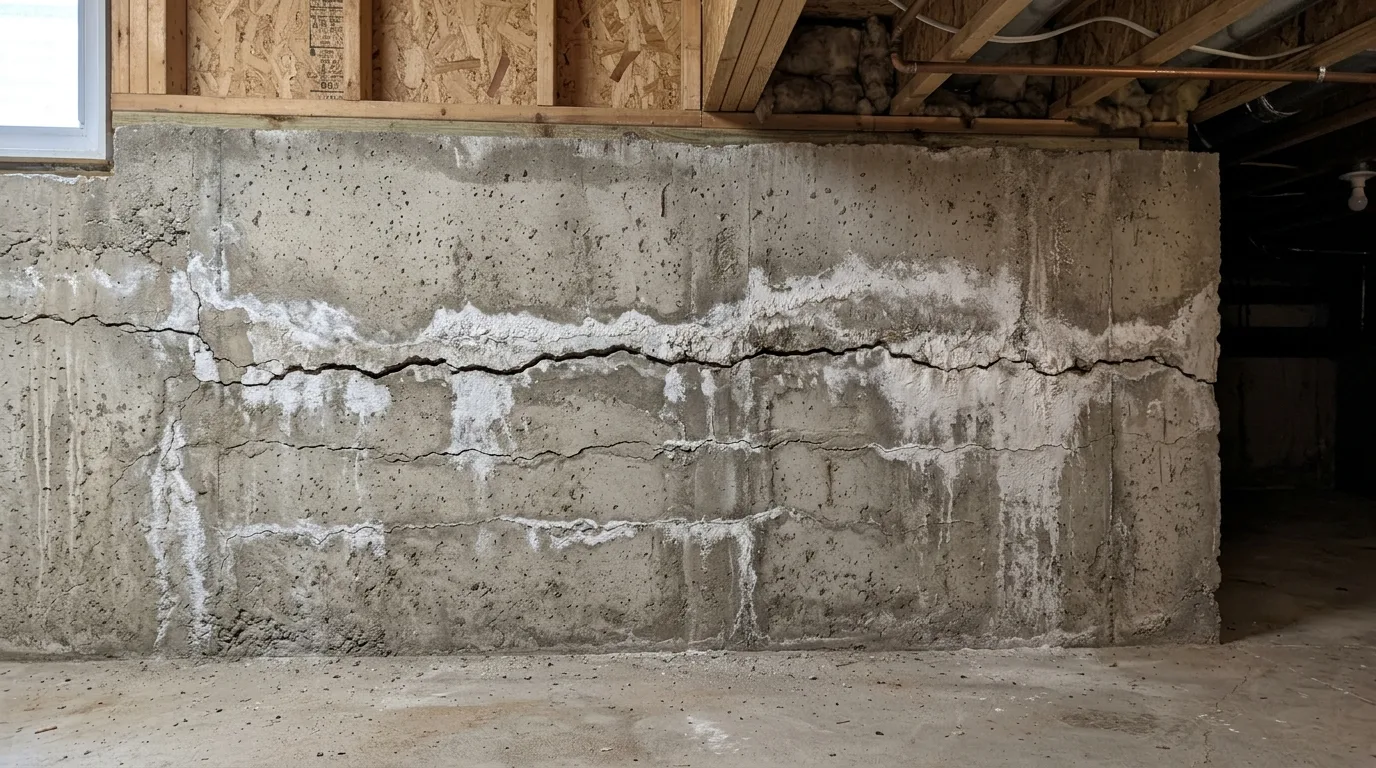
Most Riverton homeowners know that basements here are prone to moisture. Fewer understand the geological reason behind it: the ancient Lake Bonneville lakebed clays that underlie virtually the entire Salt Lake Valley have physical properties that create chronic moisture problems for below-grade construction in ways that sandy or loamy soils would not. Understanding how Riverton’s clay soil interacts with your foundation is the foundation — no pun intended — for understanding why basement water issues recur here, what prevents them, and when water damage restoration becomes necessary.
In this post, we explain Lake Bonneville clay’s drainage characteristics, how shrink-swell cycles create foundation pathways for water, and what this means for homeowners in Riverton’s established and newer neighborhoods alike.
Clay Soil Flooding Your Riverton Basement Every Spring?
We identify the water pathways and provide professional extraction and structural drying. Call (877) 698-1311 for a free assessment.
What Lake Bonneville Clay Is and Why It’s in Riverton
Approximately 15,000 years ago, a vast lake — Lake Bonneville — covered much of what is now Utah’s Salt Lake Valley at depths of up to 1,000 feet. When the lake receded, it deposited fine-grained lacustrine sediments across the valley floor: silts and clays that formed thick, dense layers now present beneath essentially every property in Riverton and the surrounding Salt Lake County area.
These Lake Bonneville clays are classified as highly plastic soils — meaning they have very high clay mineral content and exhibit the shrink-swell behavior that makes them problematic for construction. Key drainage properties:
- Hydraulic conductivity: extremely low (10⁻⁶ to 10⁻⁸ cm/sec in well-compacted clay), meaning water moves through saturated clay at a tiny fraction of the speed it moves through sandy soil.
- Swelling capacity: can expand by 10–30% in volume when fully hydrated, and shrink by a similar amount when dry.
- Moisture retention: holds water for extended periods — weeks after surface precipitation, these clays remain saturated at depth.
The practical result for Riverton homeowners is that water that falls or flows across the surface cannot drain away quickly — it saturates the clay column and then presses against any below-grade structure in the path of lateral water movement.
How Shrink-Swell Cycles Create Foundation Water Pathways
The shrink-swell behavior of Lake Bonneville clay is not just a foundation heaving concern — it’s an ongoing source of new water infiltration pathways over the life of a building.
During Riverton’s dry summer and fall months, clay moisture content drops. The clay shrinks and pulls away from foundation walls, creating gaps of 1/4 inch to 1 inch or more at the soil-foundation interface. These gaps are visible as cracks that open in the yard near the foundation in extended dry periods. They represent direct pathways from the surface down to foundation depth.
When moisture returns in fall rains and spring snowmelt, water flows into these gaps before the clay has time to re-expand and close them. By the time the clay swells enough to close the gap, water has already reached the foundation wall at depth. This cycle — dry gap formation, water infiltration into gap before swelling closes it — repeats every year and creates a progressive sealing deterioration in below-grade construction that wasn’t designed for this specific soil behavior.
Newer homes in Riverton neighborhoods like Mountain Ridge and Summerwood built after approximately 2005 are more likely to incorporate engineered drainage solutions (gravel drainage blankets, dimple mat waterproofing, footing drains) designed for this soil behavior. Older properties in established neighborhoods like Saddlebrook Estates and Rose Creek may have relied on concrete waterproofing products only, without the drainage layer that routes water away from the foundation regardless of shrink-swell behavior.
The Groundwater Dimension: Clay Plus Shallow Water Tables
Clay soil’s drainage limitations are compounded in Riverton by a relatively shallow groundwater table in lower-lying areas. The combination of clay’s poor vertical drainage and an elevated groundwater table from seasonal precipitation and irrigation creates “perched” groundwater conditions: water that cannot drain vertically accumulates at the clay’s saturated depth and moves laterally under hydrostatic pressure.
The 11800 South corridor and properties in neighborhoods near drainage channels experience this most acutely. When the groundwater table rises to within a few feet of the basement slab level — as can occur during peak spring runoff in these areas — hydrostatic pressure against basement floors and walls increases substantially. Even a properly waterproofed foundation has limits to the hydrostatic pressure it can resist without an active drainage system to relieve the pressure.
The Utah & Salt Lake Canal contributes to this groundwater elevation locally in Riverton’s western neighborhoods. Canal seepage from unlined sections raises the local groundwater table during the canal’s operating season, creating moisture conditions that can persist even during relatively dry periods. This is why some Riverton homeowners see basement moisture intrusion in June when no recent precipitation has occurred — the canal, not rain, is driving the groundwater elevation.
Chronic Basement Moisture in Your Riverton Home?
Our water damage and moisture assessment team identifies clay soil–driven moisture pathways and provides professional extraction and drying. Call (877) 698-1311.
What This Means for Water Damage and Restoration
For water damage restoration in Riverton, clay soil conditions have a direct impact on the drying process:
External moisture continues migrating into basement structures for days or weeks after an initial flooding event because the surrounding clay remains saturated and continues directing moisture toward the foundation. This ongoing external moisture source extends the drying time required to reach IICRC standard moisture levels in structural materials compared to properties on well-drained sandy soils.
IICRC-certified restoration technicians account for this in their drying plans — sizing dehumidifiers to handle both the initial moisture load and the ongoing external contribution, and extending monitoring periods to verify that materials are genuinely reaching target moisture levels rather than plateauing due to continued external input. Technicians who don’t account for this external contribution may produce drying logs that show decreasing moisture levels but never reach acceptable targets because the external source is not factored into the drying equation.
This is one of the most practically important reasons why IICRC certification matters specifically in Riverton, as we discuss in our guide to IICRC certification for Riverton homeowners.
Practical Waterproofing Options for Riverton Homeowners
Given what we know about Lake Bonneville clay behavior, certain waterproofing approaches are more effective in Riverton than others:
- Interior drainage systems with a sump pump are more reliable than exterior-only waterproofing in high-clay-content soils because they intercept water that has already migrated through the soil and provide active pressure relief — rather than trying to prevent all water from reaching the foundation wall.
- Crack injection with polyurethane or epoxy addresses existing infiltration pathways but does not address the shrink-swell gap formation that will create new pathways over time.
- Drainage mat and gravel backfill during new construction or major foundation work creates a drainage path around the foundation that short-circuits the hydrostatic pressure buildup — the most permanent prevention approach.
- Foundation grading that maintains a downslope grade away from the house for the first 10 feet reduces surface water contribution to the soil saturation cycle.
Frequently Asked Questions
Does Riverton’s clay soil cause basement flooding even without a water event?
Yes. Baseline basement moisture intrusion from clay soil hydrostatic pressure can occur without any discrete flooding event — it’s a chronic condition in many Riverton basements. When ambient moisture levels inside the basement stay elevated (relative humidity above 60%) without any obvious water source, clay soil moisture migration through the foundation is typically the cause. Chronic elevated humidity drives mold growth even without visible water. A professional moisture assessment is the first step to quantifying the source and designing an appropriate solution.
Is foundation waterproofing covered by homeowner’s insurance in Utah?
Proactive waterproofing is a home improvement, not a covered loss — standard homeowner’s insurance does not pay for preventive foundation waterproofing. However, if water damage occurs and the assessment identifies that inadequate waterproofing contributed to the loss, repair of the failed waterproofing system may be included in the restoration scope. Insurance coverage focuses on sudden events, not ongoing maintenance issues, so the framing of the claim matters significantly.
How does clay soil affect the mold risk after water damage in my Riverton home?
Clay soil’s extended moisture retention means that basement walls in contact with saturated clay remain elevated in moisture content for longer after a flooding event than walls in sandy-soil areas. Extended material moisture content is the primary driver of mold establishment — materials held above 19% wood moisture content for more than a few days are at high mold risk. This means that after a basement water event in Riverton, the drying period should be extended beyond what might be needed for an equivalent project in a sandier-soil area, and post-drying mold assessment is recommended as a standard step.
Clay Soil Water Damage in Riverton — We Understand the Cause
Riverton Water Damage Restoration provides expert basement water extraction and structural drying that accounts for Riverton's specific soil conditions. Call (877) 698-1311.
Related: