Water Damage vs. Flood Damage: What Riverton Homeowners Need to Know
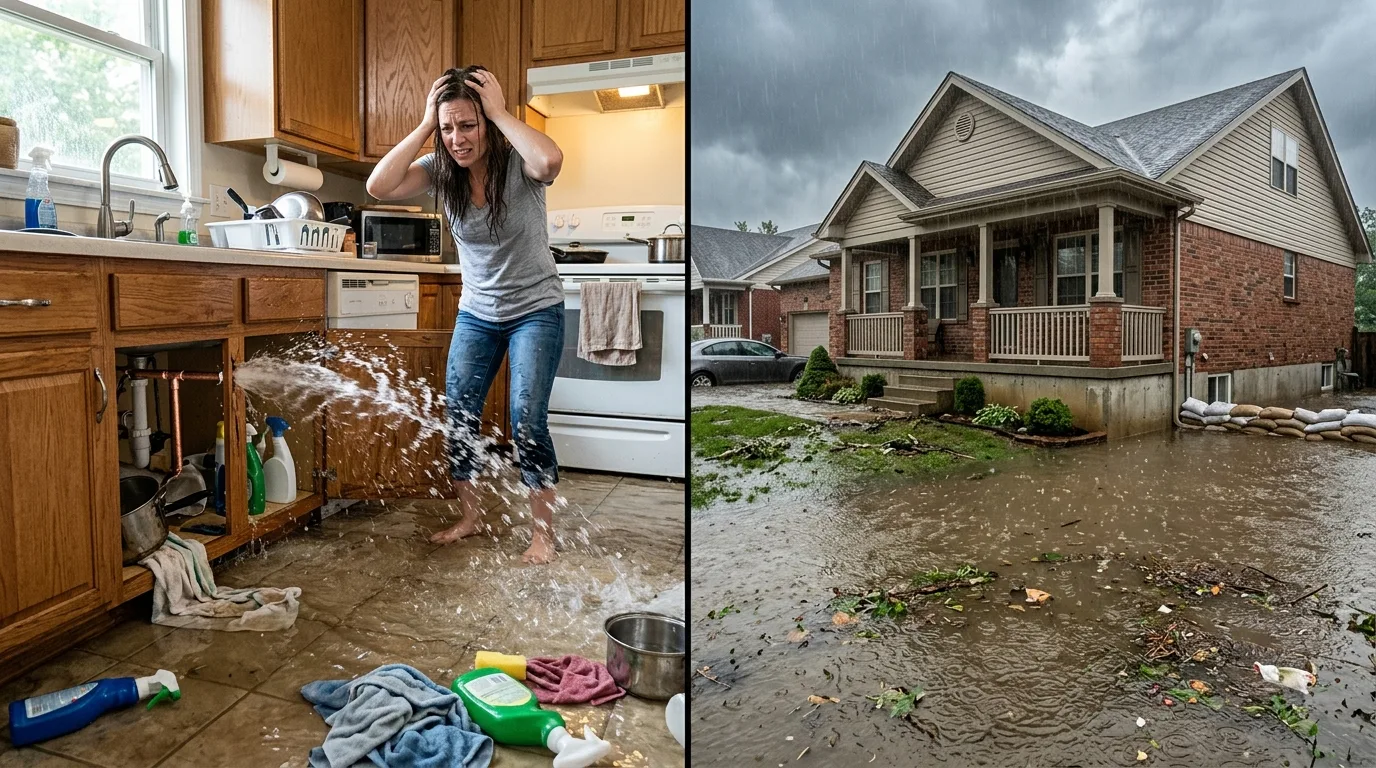
Ask most Riverton homeowners whether their home is covered for water damage, and most will say yes — their homeowner’s insurance covers it. Ask whether they’re covered for flood damage, and most will give the same answer. But the distinction between water damage and flood damage is one of the most consequential coverage differences in residential insurance, and in Riverton’s spring flooding season it determines whether a claim results in a check or a denial.
In this post, we explain exactly how insurance companies define water damage vs. flood damage, what each covers in a Utah homeowner’s policy, and what Riverton homeowners near the Utah & Salt Lake Canal or in low-lying neighborhoods should know about their coverage before the next snowmelt season arrives.
Water or Flood Damage in Riverton? We Handle Both — and the Insurance Paperwork
Call (877) 698-1311 — Riverton Water Damage Restoration works with all carriers and documents every loss type correctly.
How Insurance Defines Water Damage vs. Flood Damage
The dividing line in insurance is not about how much water entered your home or how severe the damage was — it’s about where the water came from.
Water damage (covered under most standard homeowner’s policies in Utah) is caused by water originating inside the building envelope from:
- A suddenly broken or leaking pipe
- A malfunctioning appliance (washing machine, dishwasher, water heater)
- An HVAC condensate overflow
- An overflowing toilet or bathtub
- Rain intrusion through a sudden roof or wall opening (e.g., storm damage)
Flood damage (excluded from standard homeowner’s policies, covered separately by flood insurance) is caused by water originating from outside the property and inundating the land or structure:
- Overflow of rivers, canals, or any body of water
- Accumulation of surface water from rain or snowmelt
- Mudflow
- Groundwater rise that enters through the foundation
This distinction creates a coverage gap that directly affects a significant portion of Riverton’s homeowners. Spring basement flooding from snowmelt percolating through saturated clay soils, from canal seepage raising the local groundwater table, or from surface runoff entering through foundation cracks — all of these are flood events under insurance definitions, not water damage events. Standard homeowner’s insurance does not cover them.
The Riverton-Specific Coverage Gap
The coverage gap is not an abstract concern for Riverton — it’s an annual reality. Spring snowmelt flooding in Riverton triggers hundreds of basement water events every year. Many homeowners file claims assuming their homeowner’s policy covers the damage, only to receive denials citing the flood exclusion.
Homes in neighborhoods near the Utah & Salt Lake Canal — including parts of Monarch Meadows and the 11800 South corridor — face the highest exposure to flood events as insurance defines them. Canal seepage and groundwater rise from spring runoff are external-source flooding events by definition. If you live in one of these neighborhoods and have experienced repeated spring basement flooding, your events are almost certainly being generated by external water sources — meaning they require flood insurance, not homeowner’s insurance, to be covered.
The practical protection is simple: if your property is at risk of spring snowmelt flooding, obtain a National Flood Insurance Program (NFIP) policy or a private flood insurance policy. These policies have a standard 30-day waiting period from purchase to coverage, meaning you cannot purchase them when flooding is already occurring or imminent. Purchase them in late fall or early winter, before spring runoff begins.
What Homeowner’s Insurance Does Cover in Riverton
Within the water damage category that standard policies do cover, the most common covered events in Riverton homes are:
- Burst pipes from winter freeze-thaw cycles — covered as sudden and accidental water damage.
- Water heater failure — covered when the tank fails suddenly, not when gradual corrosion develops over years.
- Washing machine supply line failure — covered as an appliance malfunction.
- HVAC condensate overflow — typically covered as sudden internal water damage.
- Roof damage from a storm allowing rain intrusion — the roof damage is covered; the water damage that follows is covered as a resulting loss.
The key word throughout is “sudden.” Insurance covers sudden and accidental events; it does not cover gradual water damage from a known leak that was ignored or not repaired.
Not Sure What Type of Water Damage You Have?
Our assessment documents the source and type of water event to support your insurance claim. Call (877) 698-1311 — Riverton Water Damage Restoration works with all carriers.
Sewer Backup: The Coverage Third Category
Sewer backup sits in a middle category: it’s neither standard water damage nor flood, and it requires a specific policy endorsement. Standard homeowner’s policies in Utah exclude sewer backup damage by default. A sewer backup endorsement (sometimes called “service line coverage” or “water backup coverage”) adds this protection for typically $50–$150 per year.
Riverton’s older neighborhoods like Saddlebrook Estates and Rose Creek have aging lateral sewer lines susceptible to root intrusion and blockage — making this endorsement particularly valuable for residents in those areas. If you’ve never confirmed whether your policy includes sewer backup coverage, check your declarations page or call your agent. Given the cost of professional sewage cleanup ($2,000–$10,000+), the endorsement cost is minimal by comparison.
Comparing Coverage Types Side by Side
| Event Type | Standard HO Policy | Sewer Backup Endorsement | Flood Insurance |
|---|---|---|---|
| Burst pipe | Covered | N/A | N/A |
| Water heater failure | Covered | N/A | N/A |
| Sewer backup | Not covered | Covered | Not covered |
| Spring snowmelt flooding | Not covered | Not covered | Covered |
| Canal overflow | Not covered | Not covered | Covered |
| Groundwater rise | Not covered | Not covered | Covered |
What to Do Right Now
If you haven’t already, take these steps before Riverton’s next spring:
- Read your homeowner’s policy — specifically the water damage and flood exclusion sections.
- Add a sewer backup endorsement if you don’t have one, especially if you live in an older Riverton neighborhood.
- Consider flood insurance if your home has experienced spring snowmelt basement flooding or if you’re near the Utah & Salt Lake Canal.
- Contact your agent to confirm what specific events are and aren’t covered — get the confirmation in writing.
Frequently Asked Questions
My basement flooded from snowmelt — is that water damage or flood damage in Riverton?
That’s flood damage. Snowmelt that saturates the soil and enters your basement through foundation walls or floor drains is classified as external-source flooding under insurance definitions — not covered by standard homeowner’s insurance. If you have NFIP or private flood insurance, it should cover this event. If not, it’s an out-of-pocket expense. This is one of the most important coverage gaps for Riverton homeowners to understand given our spring flooding patterns.
Can I buy flood insurance after my Riverton basement has already flooded?
You can purchase flood insurance after an event, but coverage will not apply to the current event — NFIP policies have a mandatory 30-day waiting period from purchase date (with a few exceptions for properties newly mapped into a flood zone). Purchase flood insurance well before spring runoff begins, typically in November or December.
Does my restoration contractor’s documentation matter for insurance claims?
Significantly. A restoration company that documents the water source, water category, and affected materials with written reports, moisture logs, and photographs provides your insurance adjuster with the evidence needed to assess the claim accurately. Ambiguous documentation — or no documentation — creates claims disputes. Riverton Water Damage Restoration provides complete cause-and-origin documentation for every project as a standard deliverable.
Water Damage, Flood Damage, or Sewage Backup in Riverton?
Riverton Water Damage Restoration handles all three — with direct insurance billing and complete claim documentation. Call (877) 698-1311 any time.
Related: